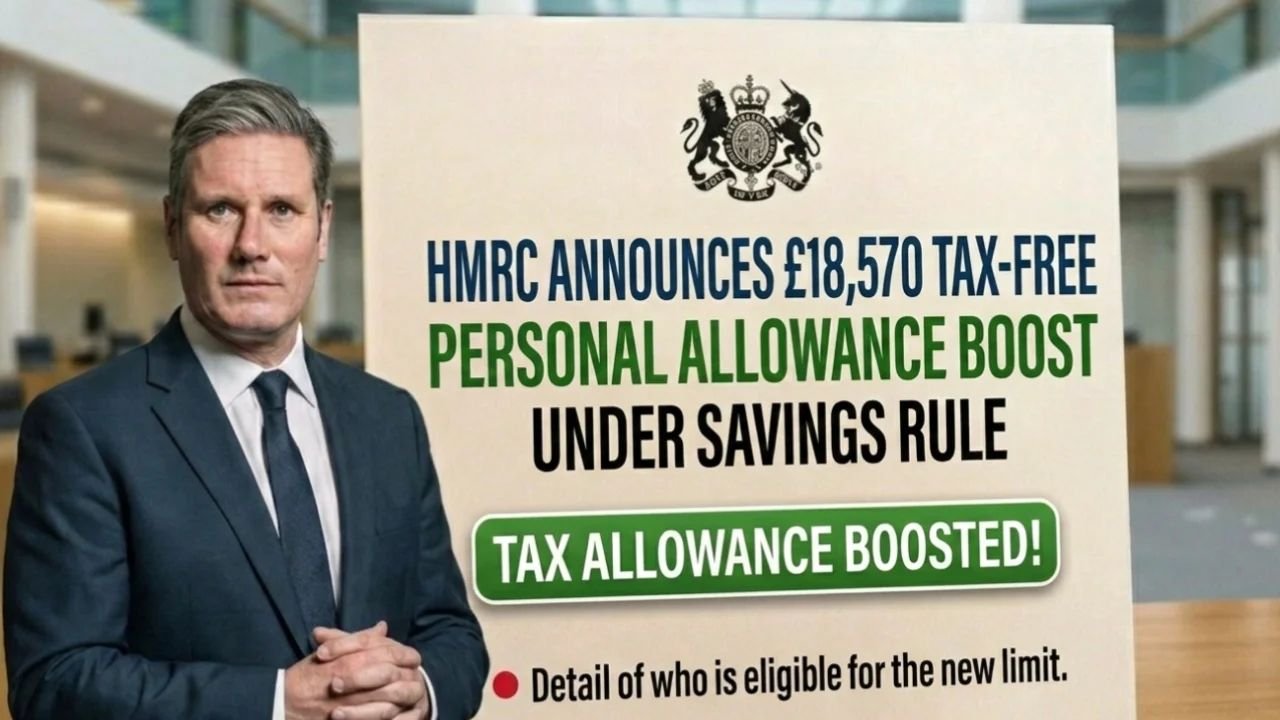
In a landmark update for UK savers, HM Revenue and Customs (HMRC) has highlighted a powerful provision that can raise an individual’s tax-free income threshold to £18,570. While the standard Personal Allowance remains at £12,570, this often-overlooked “Savings Rule” enables retirees and low-earning individuals to maximise their tax-free income by leveraging interest and investment earnings. With interest rates higher than in previous years, understanding this rule has become essential for effective financial planning.
The Three Pillars of the £18,570 Limit
The £18,570 figure is a composite of three separate allowances that stack together:
- Personal Allowance (£12,570) – The standard tax-free amount available to all taxpayers, covering wages, pensions, and other income.
- Starting Rate for Savings (£5,000) – A 0% tax band specifically for savings interest, applicable if your other income falls below the Personal Allowance.
- Personal Savings Allowance (£1,000) – A tax-free allowance on savings interest for basic rate taxpayers, unaffected by other income.

Adding these three together (£12,570 + £5,000 + £1,000) creates the potential £18,570 tax-free ceiling for the right circumstances.
How the Starting Rate for Savings Works
The Starting Rate for Savings is the least understood element of this calculation. It provides up to £5,000 of tax-free interest, but eligibility depends on your “other” income. Every pound earned above £12,570 reduces the £5,000 band pound-for-pound. For instance, if you earn £15,570 from employment, your available Starting Rate drops to £2,000.
This tapering effect makes the £18,570 limit particularly valuable for retirees or individuals with modest earnings but significant savings interest.
Leveraging the Personal Savings Allowance

The Personal Savings Allowance (PSA) provides an additional £1,000 tax-free interest for basic rate taxpayers. Unlike the Starting Rate for Savings, the PSA does not reduce based on other income as long as the individual remains in the 20% tax bracket. Higher-rate taxpayers have a reduced PSA (£500), while additional-rate taxpayers receive none. For those aiming for the £18,570 threshold, the PSA acts as a crucial top-up.
Who Benefits Most
Pensioners are the primary beneficiaries. Many retirees receive a State Pension below £12,570. Coupled with low earned income, they can utilise the full £5,000 Starting Rate and the £1,000 PSA, effectively earning £18,570 tax-free. For example, a retiree with an £11,000 State Pension could earn an extra £7,570 in bank interest without paying Income Tax—a significant benefit in today’s 5% interest environment.
The 2026 Interest Rate Context
With UK interest rates at a multi-year high, savings income is increasingly relevant to taxable income. A person with £100,000 in savings at 5% generates £5,000 annually—enough to fully utilise the Starting Rate for Savings. Previously, near-zero rates rendered this allowance largely irrelevant.
Claiming Your Tax-Free Interest

For most savers, these allowances are automatically applied. Banks and building societies report interest to HMRC, which reconciles it with wages and pensions. If excess tax is deducted, HMRC refunds it or adjusts your tax code. Low earners who do not file tax returns should review their Personal Tax Account online to ensure eligibility for the Starting Rate for Savings.
Using ISAs Strategically
Interest earned in ISAs is fully exempt from tax and does not count against the £18,570 limit. Savvy savers can place up to £20,000 annually in ISAs while using non-ISA savings to maximise the £18,570 tax-free potential, effectively protecting a larger portion of wealth.
Common Pitfalls
The main challenge is the tapering of the Starting Rate for Savings. Individuals with salaries above £12,570 must remember that every additional pound reduces the £5,000 savings band. Proper calculation ensures maximum utilisation of the tax-free allowances.
Marriage Allowance Optimisation
Couples can further optimise their household tax position using the Marriage Allowance. By transferring £1,260 of Personal Allowance from a low-earning partner to a basic rate taxpayer, couples can reduce overall tax liability. Assigning savings to the partner with lower non-savings income maximises the use of the £18,570 threshold.
Reporting Foreign Interest
Foreign interest must also be reported under HMRC rules. Offshore accounts contribute to the £18,570 calculation, and failure to declare income can lead to penalties. Transparency is essential to fully benefit from the Savings Rule.
Retroactive Claims
If you have previously overpaid tax on interest, HMRC allows claims going back four tax years via the R40 form or a written application. This is particularly useful for retirees or those whose income fell suddenly, enabling them to reclaim substantial sums.
Looking Ahead
While the Personal Allowance may remain frozen, the Savings Rule ensures that middle-income Britons can continue protecting substantial portions of their income from tax. With higher interest rates likely to persist, these three combined allowances remain a cornerstone of financial planning in 2026 and beyond.
Conclusion
HMRC’s £18,570 tax-free potential is a vital tool for savers and retirees. By understanding how the Personal Allowance, Starting Rate for Savings, and Personal Savings Allowance interact—and using ISAs strategically—individuals can legally protect a significant portion of their income from tax. For those seeking to maximise returns on savings while remaining compliant, awareness of this provision is essential in today’s evolving financial landscape.