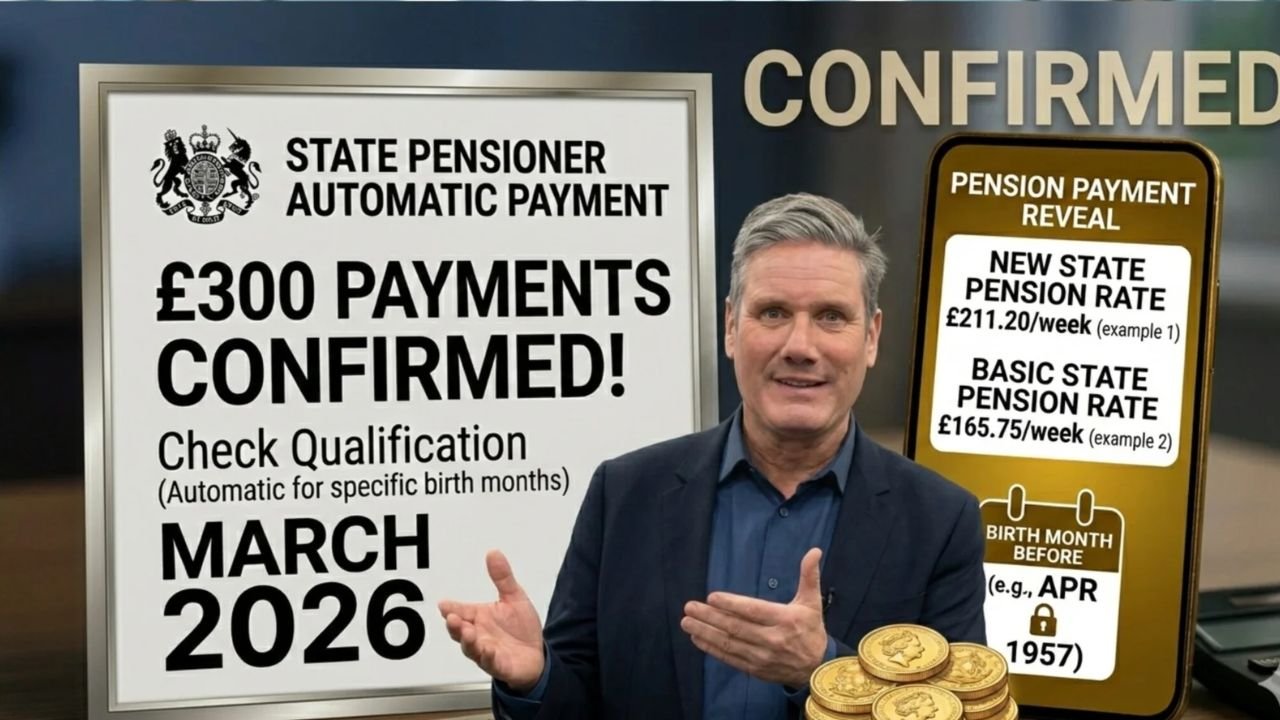
As March 2026 unfolds, UK retirees are paying close attention to a notable update from the Department for Work and Pensions (DWP). This month, a significant group of state pensioners will automatically receive up to £300 to help cover seasonal living costs, particularly heating bills. Unlike other benefits that require lengthy applications, this payment is designed to reach eligible pensioners without any manual claim, provided age and residency criteria are met.
Understanding the September 1945 Cutoff
The £300 automatic payment targets pensioners born before September 22, 1945. This date is crucial as it identifies those turning 80 or older during the qualifying period. The government recognizes that older citizens face higher energy needs, particularly during winter, making this top-tier support essential.

Pensioners born between September 1945 and September 1959 typically receive a reduced payment of £200. This tiered system ensures that while millions benefit, the largest share goes to the oldest generation, who are most likely to face higher heating and living expenses.
How the Automatic Payment Works
One of the most frequent concerns among pensioners is whether they must apply to receive this money. For most, the process is entirely automatic. The DWP uses a “qualifying week”, generally in the preceding September, to determine eligibility. If you were living in the UK and met the age criteria during that week, your details are pulled from the State Pension database.
Payments are then sent directly to the same bank or building society account used for your State Pension. Typically, the transaction will appear with a reference such as “DWP WFP” or a variant, depending on your bank’s display. This automation ensures that even those who are less digitally adept receive their entitled support without delay.
Payment Adjustments Based on Household

The amount received may vary depending on your living situation. For individuals born before September 22, 1945, living alone typically guarantees the full £300. However, if multiple qualifying pensioners share a household, the total payment may be divided.
For example:
- Two over-80 pensioners in one home might receive £150 each.
- A household with one over-80 pensioner and another younger eligible pensioner would allocate the higher portion to the elder.
This method ensures fair distribution while acknowledging that shared living costs reduce individual heating expenditures.
The Role of Pension Credit

Eligibility for the full payment is closely linked to Pension Credit, a means-tested top-up for low-income pensioners. For those over 80 who receive Pension Credit, the £300 payment is effectively guaranteed.
If you are not on Pension Credit but have limited income, it is worth checking your eligibility. Even a small Pension Credit award can unlock the full £300 payment, alongside additional benefits such as a free TV licence and council tax support.
Common Reasons for Missing the Payment
Although described as automatic, some pensioners may not receive the payment due to:
- Outdated DWP records after a move or bank account change.
- Extended periods abroad during the qualifying week.
- Residency in a care home for over 12 weeks, where heating costs are treated differently.
If you were born before September 1945 and have not received the payment by the end of March, contacting the Winter Fuel Payment Centre is essential to resolve the issue.
Income Threshold and Tax Considerations
For the 2025/2026 season, pensioners with gross annual income exceeding £35,000 may have the payment adjusted via their tax code. In this scenario, the £300 acts as a temporary cash boost, with HMRC recovering the amount later.
Most pensioners relying solely on the State Pension or modest private pensions will see no impact. However, higher earners should be aware that the payment may not be entirely tax-free.
How to Check Your Payment
To confirm receipt, look for a credit of £200 or £300 on your bank statement, typically labeled with “DWP WFP” and your National Insurance number. As a one-off payment, it will appear separately from your usual pension.
March is also when the DWP completes the final processing for delayed or updated claims, so any late entries are likely the result of successful system checks. Keeping a copy of your statement is advisable in case of any future tax queries.
Steps to Take if the Payment Is Missing
If your birthday confirms eligibility and the money has not arrived, March 31, 2026, is the final date for a manual claim. You can:
- Call the Winter Fuel Payment helpline.
- Submit a claim through the official GOV.UK form.
Have your National Insurance number, bank details, and qualifying week residence information ready. Timely action ensures you do not miss this important winter support.
Relationship to the Warm Home Discount
The £300 DWP payment is separate from the Warm Home Discount, which provides a £150 credit directly to electricity bills. Pensioners receiving the automatic payment through Pension Credit are typically eligible for both, offering a combined £450 in support.
Avoiding Scams
With the increase in automated payments, scams are on the rise. Be wary of emails or texts claiming “Your £300 payment is ready, click here.” The DWP never requests personal banking details online. Any legitimate payment will appear automatically in your account. Report suspicious messages to 7726 and delete them immediately.
Looking Ahead
While the £300 level is maintained for those born before 1945, discussions in Westminster continue regarding the structure of future winter payments. Pensioners should monitor changes, as eligibility and amounts may evolve with the State Pension age and economic conditions.
Final Thoughts
The £300 automatic payment is a vital recognition of the contributions of the UK’s oldest generation. By simplifying access and targeting those most in need, the DWP ensures essential support reaches the right hands. Check your bank statements promptly, and take action before March 31 if the payment is missing. Whether it helps cover energy bills or provides a financial buffer, this payment is a critical component of the UK’s social security system.