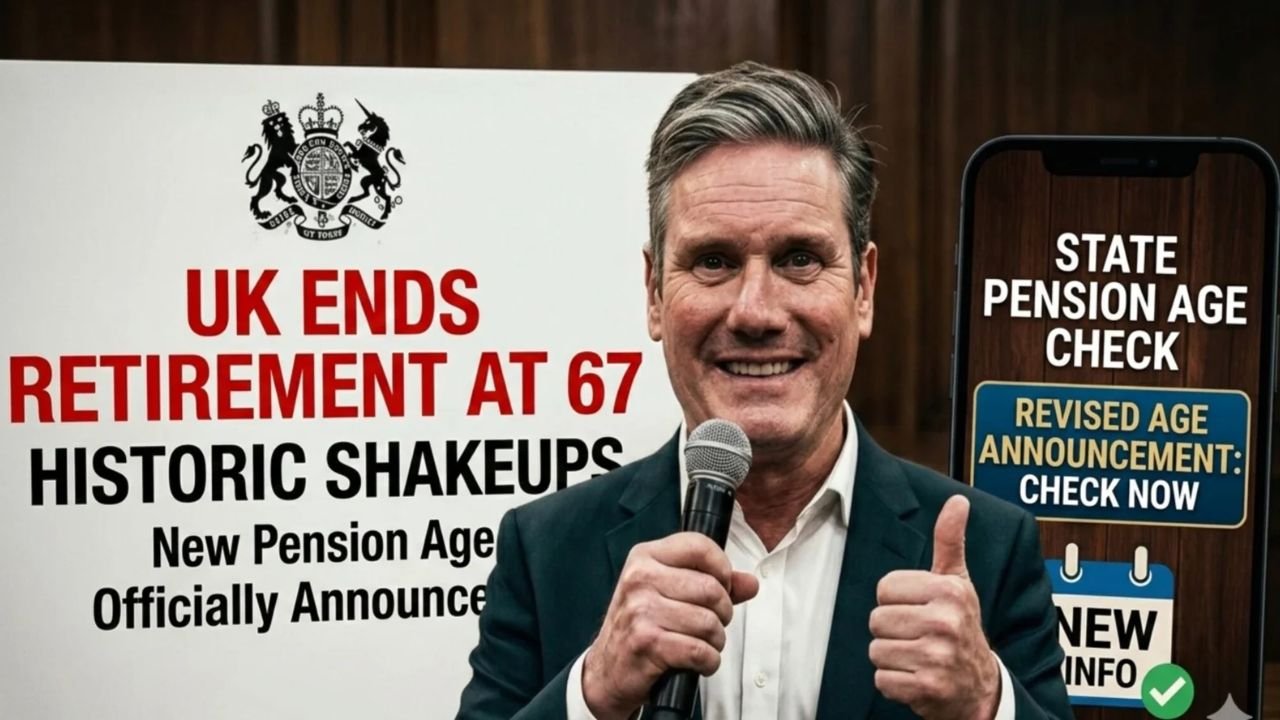
The United Kingdom is witnessing the most significant transformation in retirement in decades. For years, age 67 marked the threshold for millions of workers to claim the State Pension. In 2026, this era officially comes to an end, with the government confirming a pathway toward an even later retirement age. This historic shakeup is reshaping how Britons view their “golden years” and forces a rethink of financial planning for the future.
The Official End of Age 66
As of April 2026, the transition from age 66 to 67 for the State Pension has begun. Individuals born in the early 1960s will now need to wait an additional year before claiming their pension. This adjustment aims to maintain the sustainability of the State Pension system amid rising life expectancy and the growing financial demands on the Treasury. While billions are saved at a state level, the change directly affects individuals who must work longer or rely more heavily on private savings.
Setting the Stage for Age 68

While 67 is now a reality, attention has shifted to the upcoming rise to 68. Initially expected in the mid-2040s, new reviews suggest this milestone may arrive as early as the late 2030s. Policymakers reference the “one-third principle”—the idea that no more than one-third of adult life should be spent in retirement—as a justification. With life expectancy rising and medical advancements extending working potential, the state argues that longer professional lives are necessary to balance retirement funding.
Generational Impact
The effects of the new pension age are uneven across generations. Generation X (born 1965–1980) faces the steepest adjustment, balancing extended careers with responsibilities for children and aging parents. Millennials and Gen Z are already planning with the assumption that State Pension benefits may not arrive until 70, prompting a surge in private savings and workplace pension contributions.
Healthy Life Expectancy Disparities
A major criticism of the rigid age increase is the disparity in healthy life expectancy. While individuals in affluent areas may remain fit into their late 60s, manual workers or those in physically demanding roles may struggle long before reaching the new pension age. Calls for more nuanced policies—such as adjustments based on career type or years of service—have so far been ignored, leaving the age-based system as the standard.
The Death of Cliff-Edge Retirement

The traditional model of working full-time until retirement and stopping abruptly is fading. The rise of the “Working Retiree” sees many taking phased retirement options—reducing hours, taking consultancy roles, or securing bridge jobs to cover the gap until their State Pension begins. This approach is reshaping the workforce, with a record number of over-65s remaining employed.
The Triple Lock Guarantee
Despite a later retirement age, the government remains committed to the Triple Lock, which ensures the State Pension increases each year by the highest of inflation, average earnings growth, or 2.5%. While this protects purchasing power, economists warn that maintaining generous payouts alongside a low retirement age would be unsustainable. Raising the pension age helps finance the Triple Lock, balancing benefit generosity with fiscal responsibility.
Private Pensions as the Primary Retirement Tool
The new pension age emphasizes the importance of private and workplace pensions. Auto-enrolment has successfully encouraged contributions, but the current minimum of 8% is widely considered insufficient. Financial experts recommend aiming for 15% of income to achieve a comfortable retirement. The shift signals that the State Pension is increasingly a safety net, not a standalone retirement plan.
Property and Financial Planning Challenges

Homeownership was traditionally part of retirement security. Rising housing costs, delayed mortgage payments, and the “Generation Rent” phenomenon have undermined this. Many older homeowners now rely on equity release schemes to bridge the financial gap created by later pension eligibility, highlighting the need for careful long-term planning.
Checking Your New Pension Date
With the official confirmation of the new retirement age, it is critical to verify your specific State Pension date. The GOV.UK “Check your State Pension forecast” tool calculates your exact age based on your National Insurance record. Knowing your eligibility allows for better private savings planning, including increasing contributions to a SIPP or workplace pension to enable earlier retirement if desired.
Political Considerations
Raising the pension age is politically sensitive. Older voters are a key demographic, and changing the age risks public backlash. However, the fiscal pressures facing the UK leave little choice. Framing the increase as a necessity due to life expectancy has helped mitigate widespread resistance, though it has spurred a rapid shift toward private financial planning among the population.
Adapting to a Longer Working Life
A longer working life requires workplace adaptation. Employers must offer flexible schedules, prevent age discrimination, and provide mid-life health and financial reviews. Maintaining good health into the 50s and 60s has become not just a lifestyle choice, but a financial strategy essential for sustaining income until the State Pension begins.
Summary: The New Retirement Reality
The end of retirement at 67 represents a turning point in UK social policy. Individuals must now plan for longer careers, increased private savings, and proactive health management. While the change secures the sustainability of the State Pension, it places the onus on workers to manage their own financial and personal well-being for a retirement that may not start until 68—or later.
The new landscape makes clear that retirement is no longer an automatic milestone at 65 or 67—it is a goal requiring strategy, discipline, and foresight. By understanding these changes today, UK workers can prepare to enjoy financial freedom when their extended retirement finally begins.