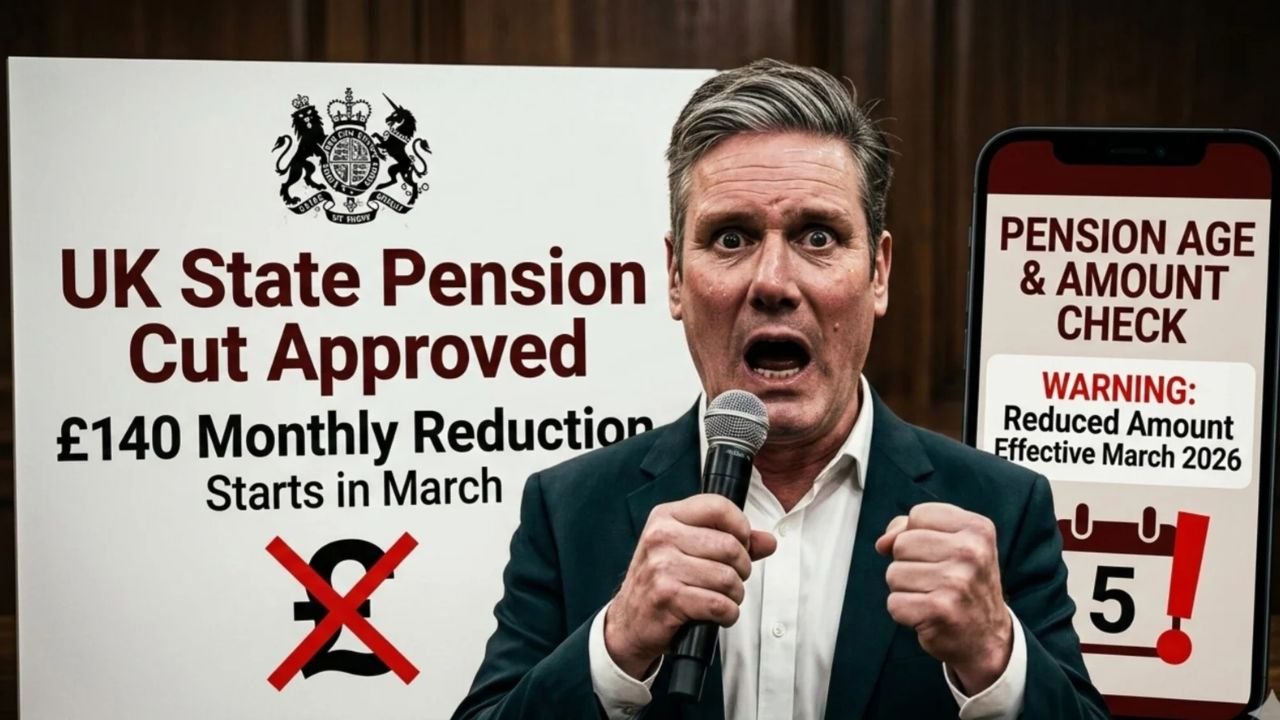
For millions of UK retirees, the State Pension is more than a government benefit—it is the foundation of financial security. Covering essentials like groceries, energy bills, and daily expenses, it represents independence and peace of mind. Yet headlines suggesting a £140 monthly reduction starting in March 2026 have sparked widespread concern. Understanding the mechanics behind this figure is essential to separating perception from reality and planning effectively for retirement.
The Source of the £140 Figure
The so-called “£140 reduction” does not represent a direct cut to the State Pension. Instead, it reflects the gap between expected income under the Triple Lock system and the actual net payments received, once tax and policy adjustments are considered.

With the State Pension being paid every four weeks, retirees receive 13 payments annually. A £140 monthly “shortfall” often arises from fiscal effects such as frozen Personal Tax Allowances. As the pension increases due to inflation or earnings growth, it can edge closer to the tax-free threshold of £12,570. For some retirees, even modest additional income—from a private pension or part-time work—triggers income tax, creating an effective drop in disposable cash.
March 2026: The Transition Month
March marks a critical period as the Department for Work and Pensions (DWP) finalises uprating figures for the upcoming financial year. Reports of reductions often relate to retirees reaching the new State Pension age of 67, whose payments may be deferred. For these individuals, the “cut” may represent the temporary loss of an expected monthly payment rather than a permanent reduction. Depending on National Insurance records, this shortfall could exceed £900.
The Role of Frozen Tax Thresholds
The most significant factor affecting pensioners’ net income is the freeze on the Personal Allowance. While the Triple Lock continues to increase pensions, reaching approximately £12,548 in April 2026, retirees who also draw small private pensions or part-time earnings can exceed the tax-free limit. This creates “fiscal drag,” where more income becomes taxable, effectively reducing available cash despite headline increases.
Why the Government Is Focused on Sustainability

The UK faces demographic pressures, with a growing retiree population and fewer working-age contributors. Analysts warn that maintaining current pension growth rates is increasingly expensive, prompting policymakers to make difficult choices. Adjustments such as limiting top-ups, tightening Pension Credit eligibility, or freezing certain benefits help control costs but can leave households feeling financially strained.
Triple Lock vs Real-World Inflation
The Triple Lock guarantees that pensions rise by the highest of inflation, wage growth, or 2.5%. In 2026, this translates to a 4.8% increase. However, retirees often experience higher personal inflation, particularly in heating and groceries. The £140 figure frequently cited in media coverage reflects this disparity between official calculations and actual cost-of-living increases, rather than a formal reduction.
Pension Credit and the “Cliff-Edge” Effect
Pension Credit plays a crucial role for lower-income retirees. Yet small increases in the State Pension can push individuals over thresholds for supplementary benefits such as housing support or council tax reductions. This results in a “cliff-edge,” where a nominal pension rise may coincide with a loss of benefits, producing an effective net reduction in income.
Strategies to Protect Income

Proactive management is key. Performing a full benefits check can uncover unclaimed entitlements, including Pension Credit and Attendance Allowance. Organisations such as Age UK and Citizens Advice provide free tools to ensure retirees are maximising support. Additionally, reviewing National Insurance contributions via the GOV.UK portal can identify gaps that, if addressed, increase future pension payouts.
The Role of Private Savings
Given policy changes and tax interactions, private pensions and personal savings are increasingly vital. Small, consistent contributions to workplace pensions can significantly boost retirement security. Even modest monthly additions in one’s 40s or 50s compound over decades, offering a buffer against shifts in State Pension income.
Looking Ahead: The Future of UK Pensions
Debates around the Triple Lock continue. Economists suggest alternatives, such as a “Double Lock” or smoothed earnings-linked increases, to maintain predictability. While headline reductions like the £140 figure are attention-grabbing, they reflect systemic adjustments rather than outright cuts. Retirees must adapt to a landscape where active management and planning are essential.
Understanding Your March Pension Statement
When the new pension statement arrives, focus on net payments rather than gross figures. Changes in tax codes can create the impression of reduced income, even when the base pension has risen. Understanding elements like the 1257L code helps retirees anticipate tax withholdings and budget accordingly.
Closing the Information Gap
The narrative of a £140 reduction highlights broader structural shifts in the UK pension system. With the State Pension evolving from a full-income provider to a foundational support, retirees need to monitor benefits, tax implications, and private savings closely. Staying informed, utilising digital tools, and seeking professional advice ensures that financial stability is maintained despite policy adjustments.
By approaching retirement planning proactively, UK pensioners can navigate these changes confidently, turning apparent reductions into opportunities to optimise income and protect their standard of living.